
 Movie
Movie 10 hours ago
9
10 hours ago
9 Katie RazzallCulture and Media Editor

 BBC
BBC
The government will consider new was of funding the BBC, including advertising and a subscription model, as it formally begins the process which will decide the corporation's future.
It has published a consultation document - or green paper - laying out plans to future-proof the BBC, put it on a sustainable financial footing and bolster trust.
The government will ask the public about several funding options - including the possibility of allowing adverts on the BBC, which could be broadcast on live TV and radio, or on iPlayer and the BBC website.
Another option being considered is a "top-up subscription service", which would offer premium content.
The current licence fee, which costs £174.50 annually, could also be replaced with a different set of rates depending on which of the broadcaster's services people use.
The discussions begin the renewal of the BBC charter - the corporation's rulebook and licence to exist - which expires in 2027.
The culture secretary Lisa Nandy said: "The BBC is fundamental to the health of our nation and we want to make sure that we put it on a firm footing for decades to come.
"We're asking everybody to get involved and play their part in helping to shape its future."
If an advertising is allowed, it would mark the first time adverts would be shown on BBC platforms in the corporation's 100-year history.
The consultation will look at numerous issues including how the World Service should be funded, the corporation's workplace culture, efficiency, transparency and accountability and the possibility of carrying advertising on the BBC.
It also wants to tackle how the BBC can survive and thrive in the streaming era.
Outgoing BBC director general Tim Davie said in a statement: "We welcome the publication of the government's green paper and the start of the public consultation on the future of the BBC. We urge everyone who cares about the success of the UK's world-leading creative industries to have their say.
"At the BBC, we want change, so we can continue to deliver for the UK for generations to come. We want to secure a public service BBC that is independent, sustainably funded for the long term, and meets our audience's needs."
Former BBC controller of editorial policy, Richard Ayre, described the consultation as "the most encouraging start of a charter process in decades, with the government apparently committed to giving the BBC a sustained and financially sustainable future".
The licence fee brought in £3.8 billion last year. Other funding streams - advertising, subscription and fee reform, including charging wealthier people more - are on the table for now, although many media commentators expect the licence fee to remain, with some changes.
Nandy said: "We're keeping all options open. The only option for funding the BBC that we've ruled out is general taxation and that is because it is essential that the BBC can hold governments of any persuasion to account, including ours, without fear or favour and without being heavily reliant on direct funding from government."
She described the BBC as "an institution that matters deeply to the democratic process in this country and to the health of our nation" and said it "has to have sustainable funding in order to thrive".
But she also acknowledged recent issues at the corporation: "There have been serious concerns about developments at the BBC, including editorial standards and about political interference.
"These aren't new challenges for the BBC. Throughout its history it's had to navigate them, but we believe that through this charter we can strengthen the amount of accountability within the BBC."
Former BBC director general Tony Hall suggested there should be careful consideration of a household tax charged in line with council tax bands.
The government rejects that model. It does, however, accept that public funding of the BBC will remain in some form and Lord Hall suggests an independent body, like a pay review body, to "take the politics out of the licence fee debate".
"Give them the task every three years of reviewing whether the money the BBC has got matches our ambitions for the BBC," he said.
He agrees the licence fee needs to be reformed and made "fairer".
The Reform party wants to scrap the licence fee altogether, while Conservative leader, Kemi Badenoch, threatened to withdraw support for it earlier this year.
The Liberal Democrats are supportive of the licence fee up until 2027. The Green Party did not specifically mention the BBC in its 2024 manifesto.
 PA Media
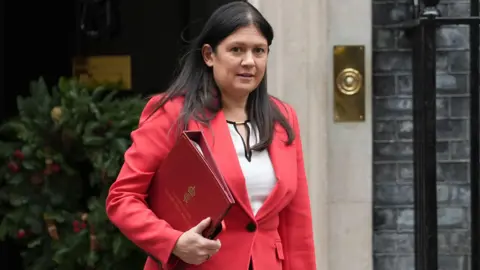
Culture Secretary Lisa Nandy has ruled out general taxation but is otherwise keeping "all options open"
The government is seeking views on how to ensure the BBC commands the public's trust, is accountable to audiences and fully represents communities.
This includes potentially giving the corporation new responsibilities to counter misinformation and disinformation, updating the BBC's mission to put accuracy on the same footing as impartiality and strengthening the BBC's independence, including examining political appointments to the BBC's board.
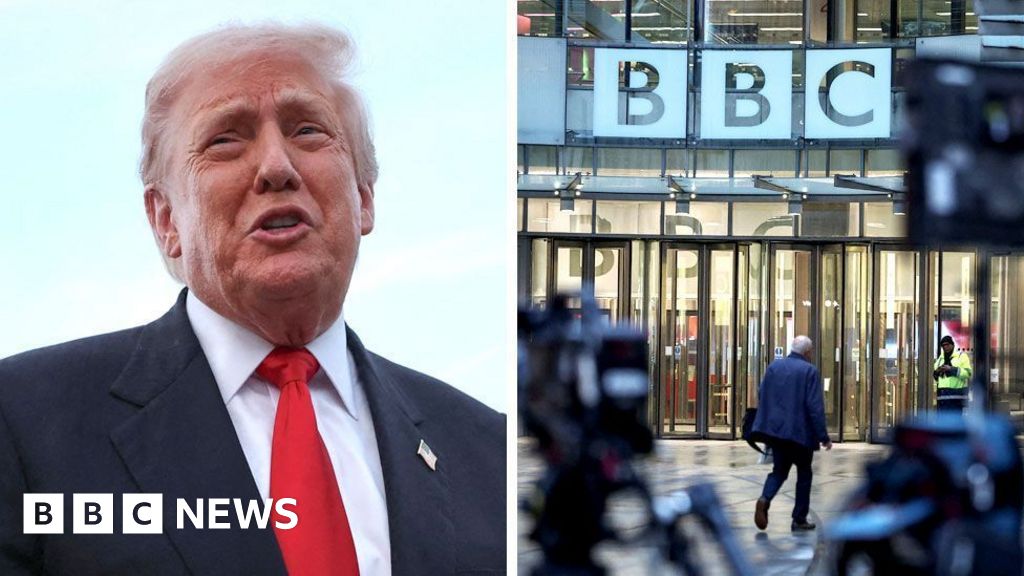
Labour MPs raised concerns around this issue in Parliament after the recent BBC controversy over the misleading edit of a Donald Trump speech on a Panorama prompted the resignations of the BBC director general and the CEO of News.
Trump is now suing the BBC for defamation over the edit.
Lord Hall told BBC News: "I think trying to take the politics as much as possible out of the organisation would be good. That means really looking carefully at appointments. I don't think there should be any political appointments to the board."
Others argue these appointments (there are five government-appointees on the BBC board including the chairman) ensure accountability and help challenge groupthink.
The BBC has faced a series of controversies in recent months for which it has had to apologise.
These include a documentary about children in Gaza that had to be taken down from BBC iPlayer after it emerged the child narrator was the son of a Hamas official and the failure immediately to remove the punk duo Bob Vylan's set from a Glastonbury live stream after offensive comments were made on stage.
Nandy termed the Labour government "unashamedly supporters of the BBC as an institution, even as we've had serious frustrations with some of the decisions and failings that have taken place at the BBC in recent months".
She said the review of the charter was the chance "to make sure that it can not just survive, but thrive. It's an institution that belongs to us all. If it didn't exist, we would have to invent it".
The consultation will also look at how to devolve more commissioning to the regions and whether there should be a new obligation on the BBC to drive economic growth, build skills and support the UK economy.
The BBC is the only organisation operating under a royal charter with an expiry date. In a speech in November 2024, the BBC chairman Samir Shah said "there are more than 1,000 charter bodies, and I am not aware of any other that needs to be renewed like the BBC".
He asked: "Should we consider the BBC also having a permanent charter like the others?"
The government is also consulting on this, with some suggesting the threat of a future Reform government is focusing minds on the uncertainty renewal every decade creates and whether it allows too much political interference.
Ayre said: "It's interesting that the government chooses the word 'future-proof' for the BBC. Can that really mean that they're considering not a 10-year charter, which is the norm, but a sort of self-sustaining charter which will see the BBC continuing in its key position as the national broadcaster for what the government calls decades to come?
"Of course future governments can always try to undo that, but actually a royal charter, it's quite difficult to undo because technically it is the will of the monarch rather than of the government of the day".
Hall said "the great thing about the charter review this time is that I believe the government wants to secure the BBC's future for the long term. It could be a great legacy."
The consultation will be open for 12 weeks from 16 December 2025 to 10 March 2026.
Next year, following the consultation, the government will publish its own vision for the BBC.
![Presidents Day Weekend Car Sales [2021 Edition]](https://www.findthebestcarprice.com/wp-content/uploads/Presidents-Day-Weekend-car-sales.jpg "Presidents Day Weekend Car Sales [2021 Edition]")



 English (United States)