
 Movie
Movie 18 hours ago
10
18 hours ago
10 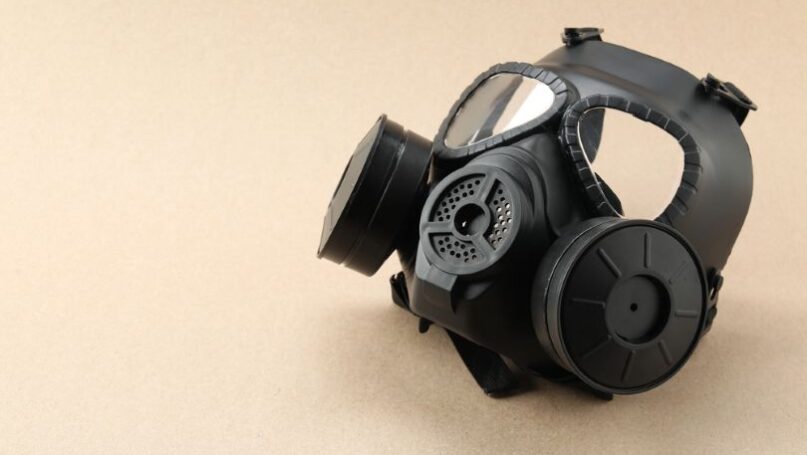
NewAfrica/Depositphotos
The IR community are increasingly alarmed by the deteriorating civil-society landscape in the former Soviet Republic of Georgia. Most recently, significant evidence has emerged that prohibited chemicals were activated against the protests of November-December 2024. One must begin with the caveat that we possess specific monitoring-organisations and legal-instruments to establish such violations. It has not been possible to engage these mechanisms (so far) in Georgia. Therefore, by implication, our observations cannot be based on meticulous forensic techniques and laboratory-sample-analysis. These are normally only at the disposal of bodies like the Organisation for the Prohibition of Chemical Weapons (OPCW.) This is the implementing body for the Chemical Weapons Convention (CWC) which reports to the UN Security Council.
Nevertheless, interpreting “open-source” verified information, there is grave concern that the Georgian authorities are in breach of the CWC. Filmographic, laboratory evidence and witnesses statements, acquired by a BBC Eye investigation, suggests the use of a WWI-Era chemical agent (bromobenzyl cyanide) also called “camite”. These events (further) scrutinized by the BBC Verification team suggest numerous toxic-discharges utilized against anti-government protesters in late 2024. Georgian officials claim these were legally-permitted crowd-control substances, and kicked-back against the BBC. It must also be stressed that the BBC does not have the specialist expertise of the OPCW. However, BBC reportage collates narratives from whistleblowers, medical experts, victim testimonies, and army experts. The BBC investigation, published in November 2025, merges residue sampling with filmographic and “in-person” accounts. When these are combined with expert chemical and medical opinion; the symptomology is inconsistent with tear gas. It suggests something much more toxic. Ground sampling (also) shows bromobenzyl cyanide at residual levels significantly beyond explanations of pollution, accidental-spillage, or industrial activity.
In late 2024, hundreds of protesters presented with acute-poison-symptomology at Tbilisi hospitals. Amnesty International called for an OPCW Fact-Finding-Mission, and an embargo on policing equipment to Georgia, a state itself party to the Chemical Weapons Convention (CWC.) This prohibits the use of toxic-chemicals as weapons. The Georgian government has strongly denied the allegations, calling the BBC report “absurd” and “false”.
The NGO, Rights Georgia, is the only civil-society organization in country supported by UNHCR, and is uniquely focused on protecting humanitarian-status-holders. It offers legal assistance on civil-liberties. On conditions of anonymity one of its officers told me:
Hundreds of the human rights supporter attended the riot scenes. I do not think I am putting them too much at risk by stating this. The state needs to understand that we are protesting their illegal activities. I saw the water-cannons. I saw what was power-hosed unto the crowds. That was not water. It was not even any nasty chemical that you might have at home. It did not smell like bleach. It immediately stung the eyes from feet away. It wasn’t something like a foul shampoo. It was some kind of powerful chemical. No-one present had been able to identify it but we have come across it before at isolated protests and maybe in smaller volume. The burning eye and nose pain, the stinging of the skin, the prevalence of this chemical, makes us think it was something completely illegal. It was like a Soviet-era-drug or from some military arsenal. It was like nothing we had seen before. Those present testified they were also hit by CS gas. But this effluent was from the water-cannons or separate to the ordinary tear-gas we get every day in Tbilisi. I cannot explain the exodus of patients to clinics across the city…It was torture. It was like what you would imagine from Hiroshima.
The State Security Service (SSG) launched its own investigation, concluding that legally permitted CS tear-gas was deployed and that there was no evidence of camite in the country’s inventory. However, Amnesty International has raised concerns that the Georgian authorities are relentlessly intimidating doctors, witnesses, and human rights defenders, seeking to discredit their testimonies.
As of December 2025, an official mission by the OPCW or the UN has not been formally confirmed. However, international partners, including the UK, have called on Georgia to fulfil its obligations under the CWC to ensure a proper investigation. The Georgian government has resisted calls for external verification. The Georgian Red Cross has not participated in official inspection into these chemical allegations but “off-record” confirmed that hospital casualties observed in December 2024 were “more severe than CS-gas patients.” The BBC World Service has spoken to chemical weapons experts, whistleblowers from Georgia’s riot police, and doctors. All suggest CS-gas would not present so acutely. Medic Dr Konstantine Chakhunashvili examined protesters’ symptoms after he himself suffered ill-effects from the water-cannon. He stated:
My skin felt like it was burning for days, and the sensation couldn’t be washed away…it was worse when trying to wash it off…I appealed for patient accounts, via social media and got about 350 replies. My study was peer-reviewed by Toxicology Reports, an international journal, and this all points to something gravely carcinogenic. I examined about seventy patients and found marked abnormalities in the electrical signals in the heart. My report echoed the conclusion that local journalists, doctors, and NGOs feared- this was not CS. A former state weapons expert, Lasha Shergelashvili, believes it is the same toxic compound he tested for use in water cannon in 2009 and has likely (since) been used periodically.
In face of state denials, the BBC clandestinely secured a leaked inventory of the state’s own Special Tasks Department, dated December 2019, listing the chemicals (UN1710 UN3439) along with preparation instructions for how they should be mixed. Off-record, several serving and retired officials confirmed there was more than just CS-gas or pepper spray in the state riot-control arsenal. UN1710 is trichloroethylene (TCE), a solvent that enables other chemicals to dissolve in water. UN3439 was found to be a lethal industrial chemical containing bromobenzyl cyanide. Chemical weapons expert Prof Christopher Holstege argues:
The clinical findings reported by both those exposed and by other witnesses are consistent with bromobenzyl cyanide. I rather discount the likelihood of the symptoms being caused by conventional crowd control measures, such as CS-gas, which was also being deployed by Georgia’s riot police last year. The persistence of the clinical effects… is not consistent with the typical agents used for crowd-dispersal, such as CS. I’ve never seen camite being utilised in modern society. Camite is markedly irritating and it would have been used because it would act as a strong deterrent. It would keep people away for a long time. They couldn’t decontaminate [themselves]. They would have to go to the hospital. They would have to leave the area. If that is indeed the case – that this chemical has been brought back – that is actually exceedingly dangerous….Camite was briefly used as a riot control agent by the American police post-World War One, but was abandoned after safer options such as CS-gas were invented. Under international law, police forces are allowed to use chemicals as crowd-control agents as long as they are considered proportionate and have only short-term effects. Given there are safer and more conventional riot-control agents available to police, an obsolete and more potent agent could be classed as a chemical weapon.
UN Special Rapporteur on Torture, Alice Edwards has previously written to Georgia’s government regarding allegations of police violence and torture during the protests, and in relation to the 2024 demonstrations, states:
Populations should never be subjected to chemical or crowd-control experiments. The lack of strict regulation around the use of chemicals in water-cannon is a problem (I) would like addressed. It does lead me to consider [this practice] as an experimental weapon. And populations should never be subjected to experiments. This is absolutely in violation of human rights law. Any effect of a riot-control measure should be temporary under international law. (These) symptoms described (in well-documented reportage) are beyond what would be considered temporary and acceptable. So, all of those cases should be investigated under the rubric of torture or other ill-treatment.
Protests on Tbilisi’s Rustaveli Avenue have decreased in size since the government increased fines and jail terms, and responded with these water-cannons. Nevertheless, on a nightly basis, demonstrators have called for the resignation of a government they accuse of rigging elections, backing Russian interests, and for imposing draconian legislation against civil society. The ruling Georgian Dream party have denied pro-Russian interests.
Chemical weapons are strictly prohibited under international law. Under the CWC, tear-gas (however) is permitted for proportionate, managed domestic riot-control. Weapons experts consulted by the BBC suggested that an obsolete, more potent agent like camite was used, alongside CS-gas, in Tbilisi. That constitutes illegal use of a chemical weapon under these circumstances. In the absence of a formal verification from the OPCW one must be circumspective. However, a large body of filmography, eyewitness testimony, medical-evidence and academic opinion, suggests that in the closing months of 2024 the Georgian Government turned prohibited chemicals on civil society protestors in Tbilisi. If proven, this is among the most appalling recent indictments of post-Soviet state-authorities.
Further Reading on E-International Relations
About The Author(s)
Martin Duffy has participated in more than two hundred international election and human rights assignments since beginning his career in Africa and Asia in the 1980s. He has served with a wide range of international organizations and has frequently been decorated for field service, among them UN (United Nations) Peacekeeping Citations and the Badge of Honour of the International Red Cross Movement. He has also held several academic positions in Ireland, UK, USA and elsewhere. He is a proponent of experiential learning and holds awards from Dublin, Oxford, Harvard, and several other institutions including the Diploma in International Relations at the University of Cambridge.
Before you download your free e-book, please consider donating to support open access publishing.
E-IR is an independent non-profit publisher run by an all volunteer team. Your donations allow us to invest in new open access titles and pay our bandwidth bills to ensure we keep our existing titles free to view. Any amount, in any currency, is appreciated. Many thanks!
Donations are voluntary and not required to download the e-book - your link to download is below.




![Presidents Day Weekend Car Sales [2021 Edition]](https://www.findthebestcarprice.com/wp-content/uploads/Presidents-Day-Weekend-car-sales.jpg "Presidents Day Weekend Car Sales [2021 Edition]")



 English (United States)