
 Movie
Movie 10 hours ago
28
10 hours ago
28 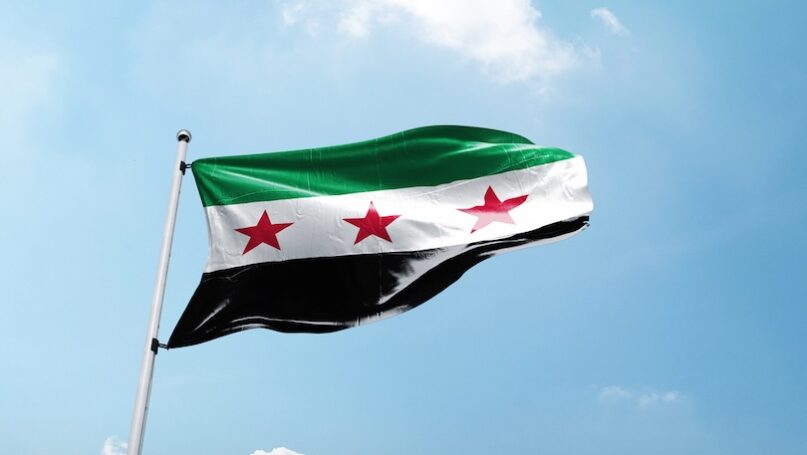
efas/Depositphotos
Hayat Tahir Al-Sham (HTS), the once recognized terrorist organization by the United States with Al Qaeda roots, sacked the Bashar Al-Assad Government in Damascus, Syria through explicit and overt assistance from Turkey. Since the fall of the multi-generation Al-Assad Government, many questions remain on the future of Syria. One answer is found in the true champion of the Syrian Civil War, Turkish President Recep Tayyip Erdoğan. For the first time in a century, Turkey has returned as Syria’s chief power broker. How did Turkey successfully eliminate the last official Ba’athist government in the world? President Erdoğan revived an old Ottoman Strategy which proved successful in Libya, Iraq, and most recently in Syria. The “Neo-Ottoman State-Client System” has been meticulously implemented by Turkish President Recep Tayyip Erdoğan to great success. This system must be rigorously examined in order to understand how Turkey succeeded in its strategic ambitions in Syria, leading to dominance over the complex leviathan of competing interests and armed factions in Syria today.
For many in the West, the rapid collapse of Assad’s forces was a significant event which strengthened the perception of Turkey’s force posture and proxies in the region. However, many have overlooked Turkey’s successful use of proxies for strategic ambitions since at least 2016. It may come as a surprise to some, but mercenary warfare has re-emerged in many conflicts around the world. Comparatively, Turkey embraces Turkic and/or Sunni Islamist proxy groups in a not too different strategy of conventional hired mercenaries. The Turkish model is a genius creation of effective networks to recruit and persuade small states, tribes, and ethnic groups to participate in military operations. One of the ideal blueprints for the “Neo-Ottoman State-Client System” was utilized between the Ottoman Empire and Crimean Tartar-Khans in the late 1400s.
Though the Tatar-Khans found themselves in suzerainty (limited self-rule) under the Ottoman Empire, they were treated more as allies than subjects. Rather than pay tribute through traditional finances such as gold, the Tatar-Khans participated in the Ottoman ranks as cavalrymen and light infantry. Yet, horses, weapons, and other equipment was paid for by the Sultan. The Tartar-Khans played a vital role in securing the northern Black Sea Region, which often was used as a launch point for Slavic, Baltic, Romanian, and Western Kingdoms to attack the Ottomans. For many generations, this symbiotic relationship was a tremendous success in not only defending Ottoman lands, but utilized in expansionist campaigns including deeper invasions into Europe. There are many other cases of victorious Ottoman yet non-ethnically Turkish military groups, such as the Albanians, or the classic example of the Janissaries under a system called Devshirme, the practice of kidnapping Christian boys for conversion to Islam and warfare.
President Erdoğan’s modern use of the model has been successful in Libya and non-Kurdish Workers Party (PKK) Kurdish groups in Iraq. Yet above these, Turkey’s significant role in the future of Syria represents the “Neo-Ottoman State-Client System’s” greatest success to date. Under this model, ethnic Turkish troops are far less likely to die in battle if their proxies are the ones primarily engaging in operations. Client groups also have very minimal international recognition or legitimacy, wherein they are expendable and can operate in the grey zone of Turkish military strategy, directly or indirectly benefiting Ankara. Turkey can furthermore experiment in tactics with its proxies and learn how to win in modern conventional wars. HTS and its new Syrian government have received tremendous diplomatic support from Ankara. Previously during the Assad control of Damascus, the opposition “Syrian Salivation Government” was a political vehicle for Turkish ambitions in foreign diplomacy.
Following the collapse, Turkey quickly worked to ensure international rejection of the now exiled Assad Government and recognition of the reorganized “Syrian transitional government” where HTS holds the most authority over other Sunni Islamist groups. The two have also cooperated economically and socio-politically, Turkey shares energy with the northwest regions of Syria which was HTS’ original base of operations. In May, Ankara and the new Damascus signed a memorandum of understanding on energy focused infrastructure and investment. In education, many Sunni Arab school lessons are in Turkish in areas held by HTS. Financially, Syrians in Damascus have at times shown a preference to use in the Turkish Lira over Syrian currency. All the while on the military front, Turkey has supported HTS through airstrikes, artillery, and other conventional military support. Do these drivers suggest that HTS and its leadership are entirely controlled by Turkey? Absolutely not. In this case, HTS has its own ambitions, just like everyone else in international politics.
Since the leader of HTS Abu-Mohammed al-Jalwani traded his nom de guerre for a suit and the title of Syrian President under the name Ahmed al-Sharaa, he has carefully used diplomacy with Arab states and secured many Western powers to lift sanctions, which culminated in a November 2025 visit to the White House. Diversification of trade from the Arabian Peninsula, Africa, and the West will allow al-Sharaa more flexibility from his Turkish dependence. However, for all of Syria’s problems, al-Sharaa almost certainly desires to restore legitimacy and authority within Syria’s historic borders. Al-Sharaa’s 2026 goals including full territorial sovereignty and economic independence will likely fall short. Turkey’s underperforming economy may be a great weakness, but compared to Damascus, Ankara is in an exponentially far better position to which Al-Sharaa cannot ignore. Moreover, Turkey remains the most capable and convenient arms provider which HTS needs to retain power over its allied challengers and adversaries. Turkey is also most capable to train and homogenize the new “unified” military. HTS will almost certainly rely on Turkey as a backchannel for military deconfliction and diplomatic support with Israel, Russia and the U.S. as all three have troops within Syria’s historic borders. Not to mention, HTS will have to navigate various security issues surrounding sectarian militias such as the Druze and far more radical Islamist groups’ disarmament or integration into a new unified Syrian army.
Yet, the most pressing question of all is a flashpoint of contention between Turkey and HTS pertaining to the status of the Syrian Democratic Forces (SDF), which are supported by the U.S. Turkey’s highest priority for many decades has been to eliminate the PKK, to which it views the SDF of the Autonomous Administrative Region of Northeastern Syria (AANES) as a harbinger of terror no different than the PKK. Since the Turkish imprisoned PKK founder Abdullah Öcalan called on his comrades to end the insurgent movement, there have been discussions on disarmament. This excited many in the West as if the moment was the Japanese surrender on the USS Missouri in1945. Yet there are no HTS or its allies assuming full control of the northeastern cities of Syria. Al-Shara’s men are not guarding Islamic State (IS) prisoners. U.S. soldiers are not taking photo ops with the SDF and HTS together with everyone shaking hands. Erdoğan and Al-Sharaa may have done what many would think impossible, but the Syria catastrophe is far from over, it is merely entering a new chapter.
With no end in sight, therefore, Syria’s strategic picture looks more complex than ever. Turkey will likely expand its military footprint throughout Al-Sharaa’s territory to continue its strategic objectives to eliminate Kurdish irredentism, secure energy resources, and project power against a perceived Israeli threat. The U.S. seems as though it will not cease support for the SDF despite diplomatically prioritizing Al-Sharaa, permitting the Kurds to retain de facto control over the northeast. Any conflict between Al-Sharaa’s soldiers and/or the Turkish military against the Kurds leaves co-located American lives in exceptional danger. In the south, Israel seems content with the status quo of Israeli Defense Forces positioned as a buffer between Damascus and Israeli territory, not to mention, armed Druze as a third-party force multiplier curtailing Al-Sharaa. Russia was assessed by many Western analysts to leave Syria entirely, but this idea was always far from believable. Tragically, Alawites and Christians have no-state backers, no substantial means of defending themselves, and the civilians are at the mercy of the former Al Qaeda Damascus leader to enforce peace and levy resources to keep non-Sunni Muslims safe — assuming this is even a policy.
Finally, too many unknown variables and wildcard scenarios exceed the scope of this analysis if another conflict breaks out between Israel and Iran. Moreover, the same logic applies if Turkish and Israeli soldiers are killed by each other or proxies. While the future remains uncertain in Syria, the “Neo-Ottoman State-Client System” has yet again succeeded and will continue to be implemented. The model notably influenced Turkey’s ally, Azerbaijan, through military reformations and operations against Armenian Nagorno-Karabakh (Artsakh). Indeed, Azerbaijan successfully hired Syrian Turkmen as mercenaries (paying homage to Ottoman history through its name, the “Sultan Murad Division”), among other radical groups in the 2nd Nagorno-Karabakh War (44-Day War). The post-liberal world order has accelerated geopolitical complexities with substantial death and destruction for countless innocent lives of all ethnicities and religions. Is the U.S. prepared for a new era in Syria and a return to the old ways of war and geopolitics?
Further Reading on E-International Relations
About The Author(s)
Jack Dulgarian is a Washington, D.C.-based analyst and consultant specializing in national security and defense with a focus on the Near East, Eastern Europe, and great power competition. Mr. Dulgarian has been referenced by National Defense University’s Joint Quarterly Magazine and given lectures to the State Department’s Foreign Service Institute. You can follow him on Substack.
Before you download your free e-book, please consider donating to support open access publishing.
E-IR is an independent non-profit publisher run by an all volunteer team. Your donations allow us to invest in new open access titles and pay our bandwidth bills to ensure we keep our existing titles free to view. Any amount, in any currency, is appreciated. Many thanks!
Donations are voluntary and not required to download the e-book - your link to download is below.



![Presidents Day Weekend Car Sales [2021 Edition]](https://www.findthebestcarprice.com/wp-content/uploads/Presidents-Day-Weekend-car-sales.jpg "Presidents Day Weekend Car Sales [2021 Edition]")




 English (United States)