
 Movie
Movie 3 hours ago
7
3 hours ago
7 Malcolm Prior,Rural affairs producer, Duncan Kennedyand Ian Aikman

 Bloomberg via Getty Images
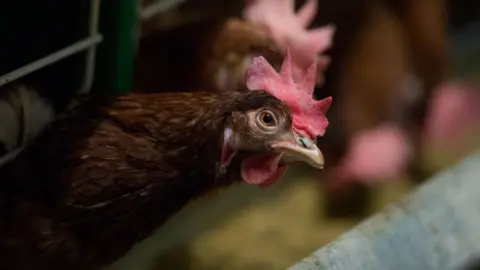
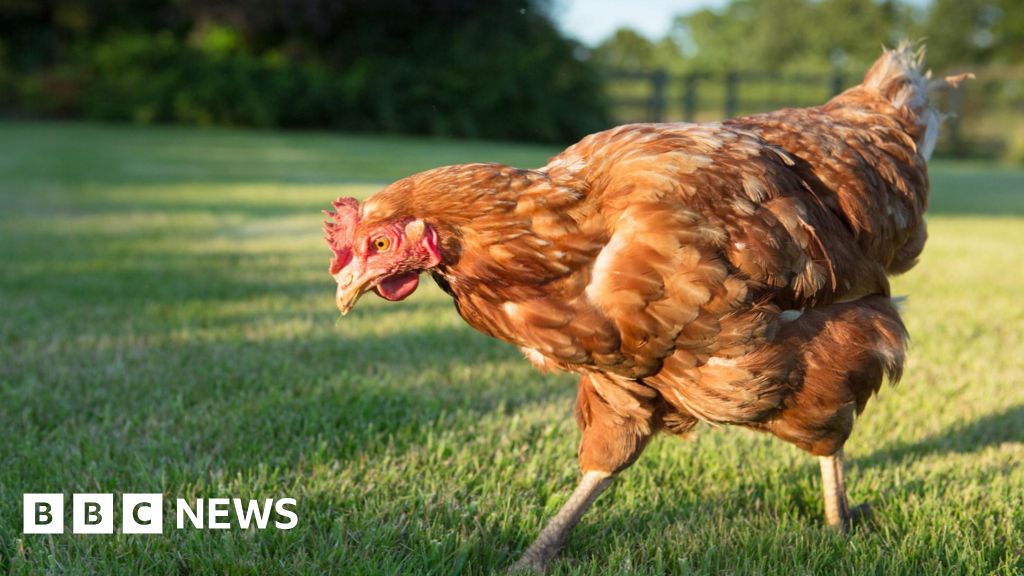
A stock image of a hen from Belgium
The government is looking to end the use of hen cages as part of a raft of proposals to improve animal welfare standards.
The measures also include moving away from the use of pig farrowing crates, which contain sows during birth and nursing to stop them rolling over onto their young.
The National Farmers' Union said laws should also require imports to be produced to the same standards to prevent unfair competition for British farmers.
Environment Secretary Emma Reynolds said the package of reforms, which include banning trail hunting and puppy farming, was "the most ambitious animal welfare strategy in a generation", but the Conservatives said it showed Labour did not care about rural Britain.
The government aims to implement the new strategy by 2030.
"We've already acted to improve zoo standards, end puppy smuggling and protect livestock from dog attacks. Now, we're planning to ban caged hens, cruel snares, trail hunting, and curb low welfare dog breeding," Reynolds said.
As well as ending "confinement systems", the government is looking at outlawing controversial so-called "Frankenchickens" - a term used by animal welfare campaigners to describe fast-growing breeds.
Anthony Field, head of Compassion in World Farming UK, said the government was "raising the bar for farmed animal welfare".
Conventional battery cages for individual hens are already banned in the UK, where the RSPCA says an estimated 80% of hens are free range.
This new law will ban the use of larger so-called "colony cages", which contain multiple chickens.
The RSPCA's head of public affairs David Bowles said removing the final 20% of hens from cages should not pose a "massive commercial problem".
NFU President Tom Bradshaw urged the government to ensure imported food was not produced at a lower standard than would be legal in the UK.
He warned that this would lead to British farmers facing unfair competition from cheaper goods around the world.
"If we don't implement the changes that we want to have in our production systems here within our import standards, then all we do is export our industry overseas," he told BBC Radio 4's Today programme.
The Department for Food and Rural Affairs (Defra) says it "will not lower food standards and will uphold high animal welfare standards as part of our approach to trade".
It adds that it will "always consider whether overseas produce has an unfair advantage and any impact that may have".
The National Pig Association said it would be "following the next steps closely" on farrowing crates and was itself looking towards more flexible systems.
The British Poultry Council have been approached by the BBC for comment.
 Getty Images
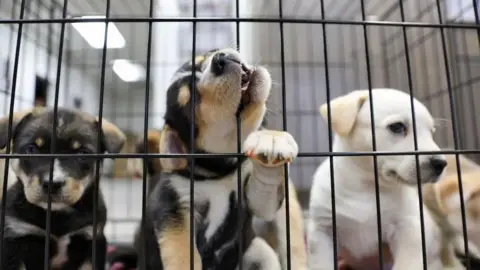
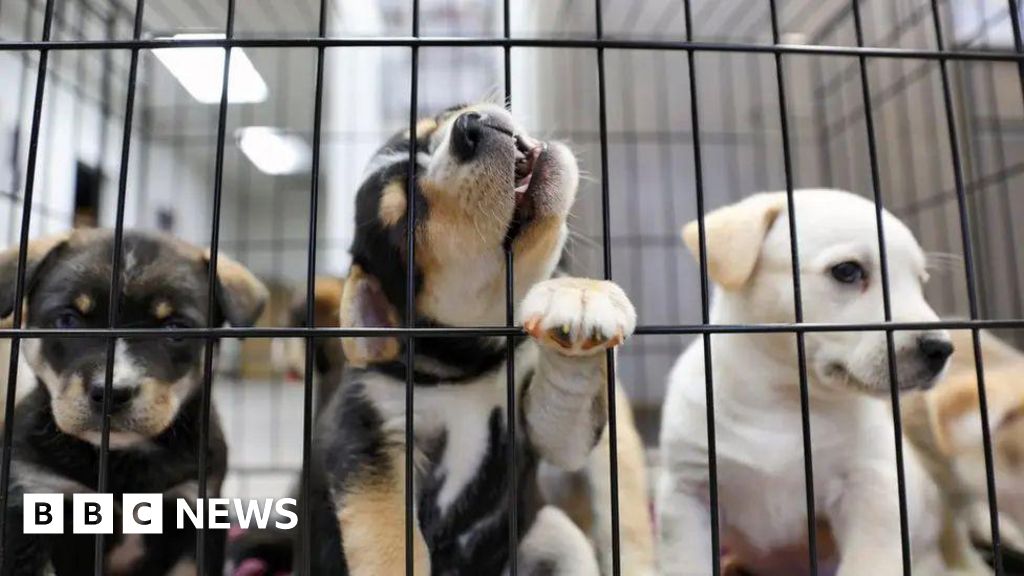
The government has vowed to end puppy farming as part of its wide-ranging strategy
Meanwhile, the RSPCA said a puppy farm ban could be a "real game-changer" and that it would work with the government on writing the legislation to "make sure there are no loopholes".
Puppy farming is a term used to describe the practice of keeping dogs in poor conditions where they produce multiple litters a year to maximise profits.
Animal rights campaigners say the practice can lead to long-term health issues in puppies.
It is not currently illegal to breed a large number of dogs. Breeders selling three or more litters a year in England, Wales and Northern Ireland must undergo an inspection to get a licence.
The government says it will launch a consultation on introducing a new registration scheme for all dog breeders, and on improving the health and welfare standards required for licences.
 Getty Images
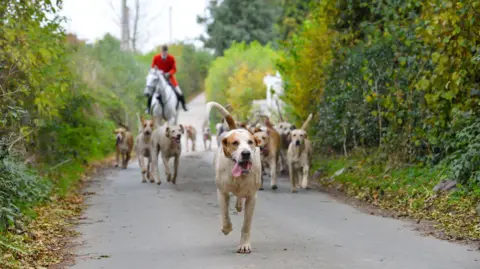
The Countryside Alliance said a ban on trail hunting was "completely unnecessary"
The government is also looking to ban the use of snare traps in the countryside and confirmed it would carry out a consultation on the proposed ban on trail hunting in 2026.
Trail hunting involves using a rag with a natural scent on to lay a trail ahead of a hunt, which is then followed by the hounds - but live animal scents could be picked up by the pack instead.
Reynolds told the BBC that while Labour had previously banned fox hunting in 2004 "we have seen that people are trying to get around that ban by using trail hunting in some cases".
"Obviously that's also a problem of enforcement, it's not just the legislation, but we are determined to go further, which is why banning trail hunting is in the animal welfare strategy," she said.
"We know sometimes it is used as a smokescreen for fox hunting."
But Tim Bonner, chief executive of the Countryside Alliance, said it was "unbelievable" that the government would be spending more parliamentary time on hunting.
He said: "Revisiting this pointless and divisive issue is completely unnecessary.
"People across the countryside will be shocked that after Labour's attack on family farms and its neglect of rural communities it thinks banning trail hunting and snares used for fox control are a political priority."
Conservative chairman Kevin Hollinrake called the ban an "attack on rural Britain and British culture", accusing the government of "punishing the law-abiding majority who support legal trail hunting".

![Presidents Day Weekend Car Sales [2021 Edition]](https://www.findthebestcarprice.com/wp-content/uploads/Presidents-Day-Weekend-car-sales.jpg "Presidents Day Weekend Car Sales [2021 Edition]")




 English (United States)